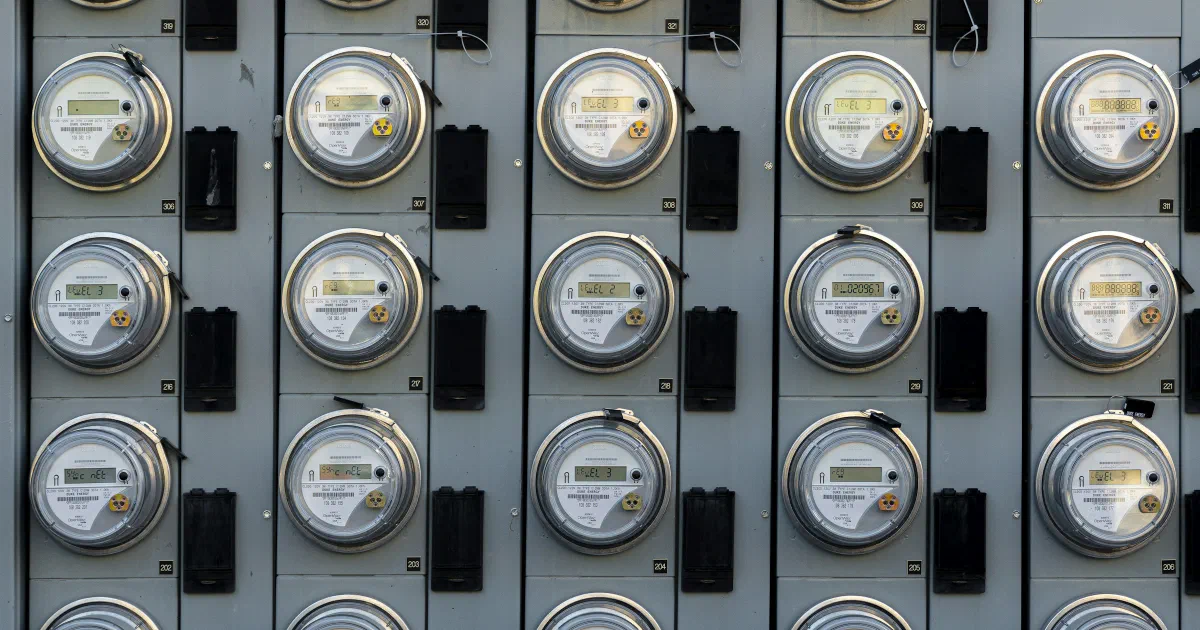
Rhode Island is one of the few states where rates did change on October 1, 2026. Rhode Island Energy’s last resort service rate, the default supply price, moved to its winter level.
This article covers Rhode Island Energy’s residential last resort service. It does not cover the Pascoag Utility District, Block Island or Clear River Electric.
Quick Summary: Residential Last Resort Service
| Period | Rate |
|---|---|
| April 1 to September 30, 2025 | 10.068¢/kWh |
| October 1, 2025 to March 31, 2026 | 14.770¢/kWh |
| April 1 to September 30, 2026 | 11.092¢/kWh |
| October 1, 2026 to March 31, 2027 | 17.029¢/kWh |
Source: Rhode Island Public Utilities Commission, last resort service page. The page listed the winter 2026-27 rate as pending final commission approval when we checked.
What It Means for a Bill
Our math, supply only:
| Monthly use | Summer 2026 | Winter 2026-27 | Change from summer | Change from last winter |
|---|---|---|---|---|
| 500 kWh | $55.46 | $85.15 | +$29.69 | +$11.30 |
| 750 kWh | $83.19 | $127.72 | +$44.53 | +$16.94 |
The winter rate is 54% higher than the summer rate and 15% higher than last winter’s.
Delivery charges, the customer charge, energy efficiency and renewable charges, and tax are added on top.
Credits That Offset Part of It
Two credits apply to residential accounts this winter:
| Credit | Amount | Months | Source |
|---|---|---|---|
| “Hold harmless” credit from the PPL acquisition settlement | About $14 a month | From October 2026 | Rhode Island Energy |
| Regional Greenhouse Gas Initiative (RGGI) credit | $20.45 a month ($61.35 in total) | January, February and March 2027 | Approved by the PUC on September 24, 2026 |
The RGGI credit totals $28 million across more than 450,000 residential accounts on the A-16 and A-60 rates.
Our math at 500 kWh, compared with summer:
- October to December: $29.69 more for supply, less about $14 in credit = about $15.69 more a month.
- January to March: $29.69 more, less about $34.45 in credits = about $4.76 less a month.
This counts supply and the two credits only. Delivery rates also change by season, and winter usage is usually higher than 500 kWh in electrically heated homes.
What Is Inside the 17.029 Cents
Uprise RI reported the components of the proposed rate: a 14.725¢ base charge, a 0.350¢ adjustment factor, a 0.350¢ administrative factor and a 1.604¢ Renewable Energy Standard charge. About 73% of the state’s residential electricity use is on last resort service.
Why Winter Costs More
Rhode Island Energy buys supply in advance for each six-month period and passes the cost through. Winter prices are higher across New England because natural gas, which fuels much of the region’s power, is in demand for heating at the same time.
Your Options
- Stay on last resort service. The rate holds until March 31, 2027.
- Check your town’s community aggregation program, if it has one.
- Compare competitive suppliers. Read the contract length, any cancellation fee and what happens when the term ends.
Last resort service resets on April 1, 2027.
What This Means for Homeowners With Solar
Rhode Island still has net metering, with reduced credit for exports from newer systems.
- Newer systems: NuWatt Energy’s 2026 guide says systems interconnected after April 15, 2023 receive about 80% of the retail rate for exported energy, while older systems keep full retail credit.
- Self-use: power you use as it is produced offsets the full retail rate.
- Size limit: up to 125% of your annual on-site use.
- Alternative: the Renewable Energy Growth program pays a fixed price per kWh for 15 years under a separate tariff.
Rhode Island Energy filed an updated net metering tariff with the Public Utilities Commission in May 2026 (Docket 25-50-EL). We did not read it, so treat the 80% figure as an installer’s description and check the tariff.
A newer filing, Docket 26-30-EL (August 14, 2026), is pending. For systems of 25 kW or less it would credit surplus above a home’s own use in a billing period at a monthly wholesale rate tied to the ISO New England energy price, instead of the Last Resort Service supply rate, and drop the 125% cap on those excess credits. Public comments are due November 16 and the evidentiary hearing is November 17. See our report on the proposed Rhode Island net metering changes. Source: Rhode Island Energy tariff advice filing, Docket 26-30-EL.
What it means: under credits tied to the retail rate, the winter supply increase raises the value of winter solar. Winter production is much lower than summer, so the annual effect is smaller than the rate change suggests.
Rules checked October 22, 2026. Solar tariffs change, so confirm the current terms with your utility before you sign a contract. Our solar payback guide shows how the retail rate and the export credit change the math.
What to Check on Your Bill
- The supply rate on your first bill covering October.
- Whether a bill straddling September and October is split between the two rates.
- Your supplier name, if it is not Rhode Island Energy.
For help sorting the lines on your bill, see our guide to reading your electric bill.
Limitations
The commission’s page listed the winter rate as pending final approval, and the evidentiary hearing was held on September 16, 2026. We found no report of the final order on the rate itself, although the commission approved the related winter credits on September 24. The 17.029¢ figure is the filed rate. Delivery rates were not researched.
Compare With Nearby States
Statewide average for context: the U.S. Energy Information Administration (EIA) puts Rhode Island’s average residential price at 28.18¢/kWh in August 2026, up 6.2% from 26.53¢ in August 2025. The U.S. average was 18.16¢. At 1,000 kWh that works out to $281.80 (1,000 × 28.18¢). This is total residential revenue divided by kWh sold across every utility in the state, fixed charges included, and it is a preliminary estimate. It is not any one utility’s rate.
Rate rules stop at the state line, and often at the utility boundary. See our guides for Connecticut, Massachusetts, New York, or the full rates by state list.
Sources
- Rhode Island Public Utilities Commission, Rhode Island Energy Last Resort Service
- Rhode Island Energy, 2026 winter last resort service rate filing, July 22, 2026 (Docket 26-27-EL)
- What’s Up Newp, “PUC approves $28 million in winter electric bill credits,” Sept. 2026
- Uprise RI, “ISO-NE Says Grid Held; RI Energy Winter Rate Set to Jump,” Sept. 16, 2026
- WPRI, “RI regulators approve electricity rate hike, some financial relief for winter months”
- NuWatt Energy, “RI Net Metering Guide 2026”
- Rhode Island Energy, net metering tariff compliance filing, Docket 25-50-EL, May 18, 2026
- U.S. Energy Information Administration, Electric Power Monthly, Table 5.6.A (August 2026 data, released October 23, 2026)
Frequently asked questions
Did Rhode Island electric rates change on October 1, 2026?
Yes. Rhode Island Energy's residential last resort service rate for October 1, 2026 through March 31, 2027 is listed at 17.029 cents per kWh, up from 11.092 cents in the summer period.
How much more will I pay this winter?
For supply, about $29.69 more a month than summer at 500 kWh, and about $11.30 more than last winter. Credits of about $14 a month from October, plus $20.45 a month from January to March 2027, reduce the net increase.
Why is the winter rate higher than summer?
New England relies on natural gas for power, and gas is more expensive in winter when it is also needed for heating. Rhode Island Energy resets the rate every six months to reflect what it paid for supply.
Does Rhode Island have net metering?
Yes. An installer guide says systems interconnected after April 15, 2023 receive about 80% of the retail rate for exported energy, while older systems keep full retail credit. Systems can be sized up to 125% of annual use. An updated tariff was filed in May 2026.