A kilowatt (kW) measures power: how fast electricity is being used at one moment. A kilowatt-hour (kWh) measures energy: how much was used over time. Your utility bills mostly by kWh. Solar quotes and battery spec sheets use both, and mixing them up is an easy way to misread a solar quote.
This guide shows where each unit appears on a bill, an appliance, a solar quote and a battery spec sheet, with the math spelled out.
The Short Version
The U.S. Energy Information Administration (EIA) defines the units this way: “One kilowatt is equal to 1,000 Watts,” and “One kWh is one kilowatt generated for one hour.” Its example: “if you use a 40-Watt (0.04 kW) light bulb for five hours, you have used 200 Wh, or 0.2 kWh, of electrical energy.”
Think of a garden hose. kW is how hard the water is flowing right now. kWh is how many gallons filled the bucket.
| Unit | What it measures | Where you see it |
|---|---|---|
| Watt (W) | Power | Appliance labels, a single solar panel’s rating |
| Kilowatt (kW), 1,000 W | Power | Solar system size, battery output, EV chargers, demand charges |
| Kilowatt-hour (kWh) | Energy (power × time) | Your bill’s usage and energy charge, battery capacity, solar production |
“kW per hour” and “kW/h” are not real billing units. If a quote or ad uses them, ask what it means.
kWh on Your Electric Bill
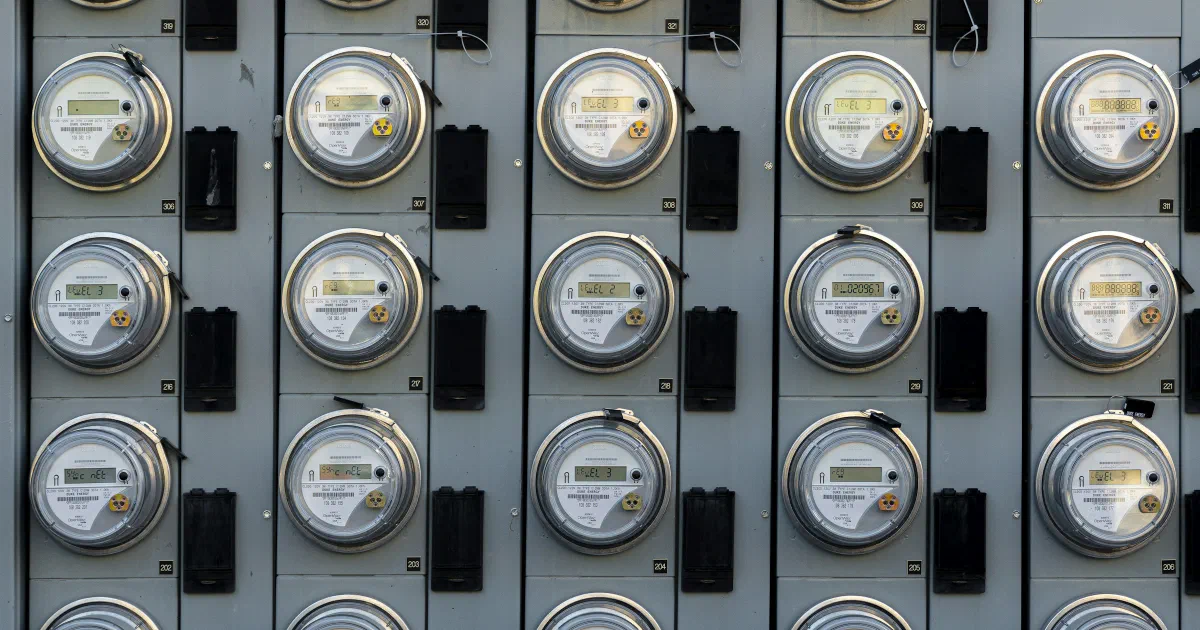
Your meter counts kWh, and the energy charge is a price per kWh.
EIA says the average U.S. residential customer used 10,791 kWh in 2022, “about 899 kWh per month.” EIA’s Electric Power Monthly puts the U.S. average residential price at 18.16 cents per kWh in August 2026 (preliminary). Putting those together:
- 899 kWh × $0.1816 = about $163 a month
That average price includes fixed charges spread over every kWh sold, so it is a rough guide, not any one utility’s rate. Your own bill shows your kWh and your rates. Our guide to reading your electric bill explains each line.
When kW Shows Up on a Bill: Demand Charges
Some residential rates add a demand charge, priced per kW. It is based on your highest rate of use over a short interval (Santee Cooper, below, uses one hour), usually during set peak hours. Two homes can use the same kWh in a month and pay different demand charges if one runs everything at once.
A current example: South Carolina’s state-owned Santee Cooper charges $8.00 per kW on its standard residential rate today. A home billed at 5 kW pays $40 in demand charges that month (5 × $8.00), on top of energy charges. Santee Cooper’s board just approved a change that bills the average of four monthly peaks instead of the single highest hour; see our report on the Santee Cooper 2027 rate increase.
To lower a demand charge, spread out large loads such as the dryer, oven, water heater and EV charging. Our explainer on residential demand charges covers which utilities use them.
From Appliance Watts to kWh and Dollars
The Department of Energy’s formula:
(Wattage × hours used per day) ÷ 1,000 = daily kWh
DOE’s example is a 1,500-watt kettle used one hour a day: 1.5 kWh a day, or 547.5 kWh a year. At 18.16 cents per kWh:
- 1.5 kWh × $0.1816 = about 27 cents a day
- 547.5 kWh × $0.1816 = about $99 a year
One caution from DOE: “The wattage listed is the maximum power drawn by the appliance.” Many appliances use less most of the time. A plug-in usage monitor measures actual use for 120-volt devices, but DOE notes it can’t be used with large 220-volt appliances such as electric clothes dryers, central air conditioners or water heaters.
kW and kWh on a Solar Quote
A solar quote leads with system size in kW, the panels’ combined rated power. A 7.7 kW system is, for example, about eighteen 430-watt panels. (Berkeley Lab puts the median U.S. home system in 2025 at 7.7 kW DC.)
What saves you money is production in kWh. That depends on sunshine, roof angle, shading and equipment losses. The National Renewable Energy Laboratory’s 2023 Annual Technology Baseline models a home system’s first-year capacity factor at 12.7% in the least sunny locations to 19.6% in the sunniest. Converted to kWh per kW of panels per year:
- Least sunny: 0.127 × 8,760 hours = about 1,113 kWh per kW a year
- Sunniest: 0.196 × 8,760 hours = about 1,717 kWh per kW a year
So a 7.7 kW system would make roughly 8,570 to 13,220 kWh a year, by our math from NREL’s range. That brackets the 10,791 kWh EIA reports for an average home in 2022.
When you compare quotes, compare the estimated annual kWh and the price per watt, not just kW. Two 8 kW systems on different roofs can produce very different kWh. Our guide to how many solar panels you need walks through sizing from your bill.
kW and kWh on a Home Battery
Battery spec sheets list both units, and each answers a different question.
- kWh (capacity): how much energy the battery holds, which sets how long it can run your home.
- kW (power): how much it can deliver at once, which sets what can run at the same time.
Tesla’s Powerwall 3 datasheet lists “Nominal Battery Energy 13.5 kWh AC” and “Maximum Continuous Discharge Power 11.5 kWAC.” At a steady 1.5 kW load, 13.5 kWh lasts about 9 hours (13.5 ÷ 1.5), before losses or any solar recharge. Drawing the full 11.5 kW, it would last a little over an hour. Real run time will be lower once losses and reserve settings are counted.
Our battery sizing guide works through both numbers for backup and time-of-use savings.
Quick Conversions
| You know | Do this | Example |
|---|---|---|
| Watts and hours | W × hours ÷ 1,000 = kWh | 1,500 W × 2 h = 3 kWh |
| kWh and your rate | kWh × $/kWh = cost | 3 kWh × $0.1816 = $0.54 |
| Battery kWh and load kW | kWh ÷ kW = hours | 13.5 ÷ 1.5 = 9 h |
| Solar kW and location | kW × kWh-per-kW = yearly kWh | 7.7 × 1,113 = about 8,570 kWh |
Sources and verification
| Important claim | Source | Status |
|---|---|---|
| Definitions of kW and kWh; 40-watt bulb example | EIA, Measuring electricity | Verified |
| 10,791 kWh a year, about 899 kWh a month, 2022 | EIA FAQ: How much electricity does an American home use? | Verified |
| U.S. average residential price 18.16 cents per kWh, August 2026 | EIA Electric Power Monthly, Table 5.3 | Verified (preliminary data) |
| Daily kWh formula; 1,500 W kettle example; nameplate wattage is maximum; usage monitors | DOE Energy Saver, Estimating appliance energy use | Verified |
| Santee Cooper demand charge $8.00 per kW today | Santee Cooper management presentation, May 1, 2026 | Verified |
| Capacity factors 12.7% to 19.6% for a modeled 7.9 kW DC home system | NREL ATB 2023, Residential PV | Verified |
| Median U.S. home system 7.7 kW in 2025 | Berkeley Lab, Distributed Solar and Storage 2026 Data Update | Verified |
| Powerwall 3: 13.5 kWh nominal, 11.5 kW continuous | Tesla Powerwall 3 datasheet | Verified |
| Bill, kettle, solar production and battery run-time figures | Our arithmetic from the figures above | Qualified (examples based on stated assumptions) |
Frequently asked questions
What is the difference between kW and kWh?
kW measures power, the rate at which electricity is used at a given moment. kWh measures energy, the total used over time. A 1 kW heater running for two hours uses 2 kWh. Your utility bills mostly by kWh.
How many kWh does a house use per month?
EIA says the average U.S. residential customer used 10,791 kWh in 2022, about 899 kWh a month. Your own number is on your bill, and it swings with the seasons, so look at a full year.
How do I convert watts to kWh?
Multiply watts by hours of use and divide by 1,000. A 1,500-watt kettle used one hour a day uses 1.5 kWh a day. Multiply kWh by your price per kWh to get the cost.
Is a 10 kW solar system the same as 10 kWh a day?
No. 10 kW is the panels' rated power. Daily energy depends on sunshine. Using NREL's modeled range of about 1,100 to 1,700 kWh per kW a year, a 10 kW system would make roughly 30 to 47 kWh a day on average over a year.
What is kW on my electric bill?
If your bill shows kW, you are likely on a rate with a demand charge. It is usually based on your highest use at one time, measured over a short interval, often during peak hours (some utilities average several peaks). Spreading out big loads lowers it.