Georgia Power did not get a new rate change approved for October 1, 2026. The change that matters this year happened on June 1, when the Georgia Public Service Commission (PSC) approved new fuel and storm charges that lowered a typical residential bill by about $4 a month. October bills do look different for another reason: the standard plan moves from summer to winter pricing.
This article covers Georgia Power, which serves about 2.8 million customers. It does not cover Georgia’s electric membership cooperatives (EMCs) or city-owned utilities, which set their own rates.
Quick Summary
| Item | Effective date | What changed | Residential impact |
|---|---|---|---|
| Fuel and storm cost charges | June 1, 2026 | Lower fuel charge, new storm charge | About $4.03 to $4.04 less per month at 1,000 kWh |
| Base rates | Frozen since July 2025 | No change through at least end of 2028 | None |
| Seasonal pricing (Residential Service plan) | October through May | Winter energy rate replaces summer tiers | Lower energy charge per kWh |
| Solar export credit (RNR, instantaneous netting) | Calendar year 2026 | 3.2188 ¢/kWh plus 4 ¢/kWh adder | Applies to exported kWh only |
Bill impacts are utility and regulator estimates for a 1,000 kWh month, not your personal bill.
What Changed on June 1, 2026
On May 28, 2026, the PSC unanimously approved a settlement covering two Georgia Power cases filed on February 17, 2026: Fuel Cost Recovery (Docket 56765) and Storm Cost Recovery (Docket 44280).
- Fuel: the fuel charge fell. Fuel is passed through to customers separately from base rates.
- Storms: Georgia Power said its storm reserve was under-recovered by $912 million, including nearly $800 million from Hurricane Helene in 2024. The company asked to collect about $270 million a year. The approved amount is $109 million a year, spread over 67 months.
- Net result: the fuel decrease is larger than the new storm charge, so bills fell.
The company’s original February proposal would have saved a 1,000 kWh customer about $1.32 a month. The approved settlement roughly tripled that to about $4 a month. Georgia Power puts total customer savings at about $285 million a year.
The vote was unanimous, but not uncontested. Commissioner Peter Hubbard said the commission “missed opportunities to save Georgia families another $50 million” after his amendments failed.
What Changes in October
Nothing new was approved for October. The seasonal rate switches. Georgia Power’s standard Residential Service plan lists these energy charges on its rate plan page:
| Season | Usage | Energy charge |
|---|---|---|
| Winter (October to May) | All kWh | 8.2 ¢/kWh |
| Summer (June to September) | First 650 kWh | 8.8 ¢/kWh |
| Summer | 650 to 1,000 kWh | 14.6 ¢/kWh |
| Summer | Over 1,000 kWh | 15.1 ¢/kWh |
Worked example, 1,000 kWh month, energy charges only:
- Summer: (650 × $0.088) + (350 × $0.146) = $57.20 + $51.10 = $108.30
- Winter: 1,000 × $0.082 = $82.00
- Difference: $26.30
This is our estimate from the rounded rates on Georgia Power’s page. It leaves out the basic service charge, fuel, other riders, fees and taxes, so it is not a total bill. It only shows why the same usage costs less from October onward. Customers on time-of-use or other plans have different prices.
Why Base Rates Are Not Changing
On July 1, 2025, the PSC approved a plan to keep Georgia Power’s base rates “stable and predictable through at least the end of 2028.” Base rates are what you pay under your rate plan, excluding fuel. The freeze has two stated exceptions: fuel costs and storm costs. Both were settled in the May 2026 decision.
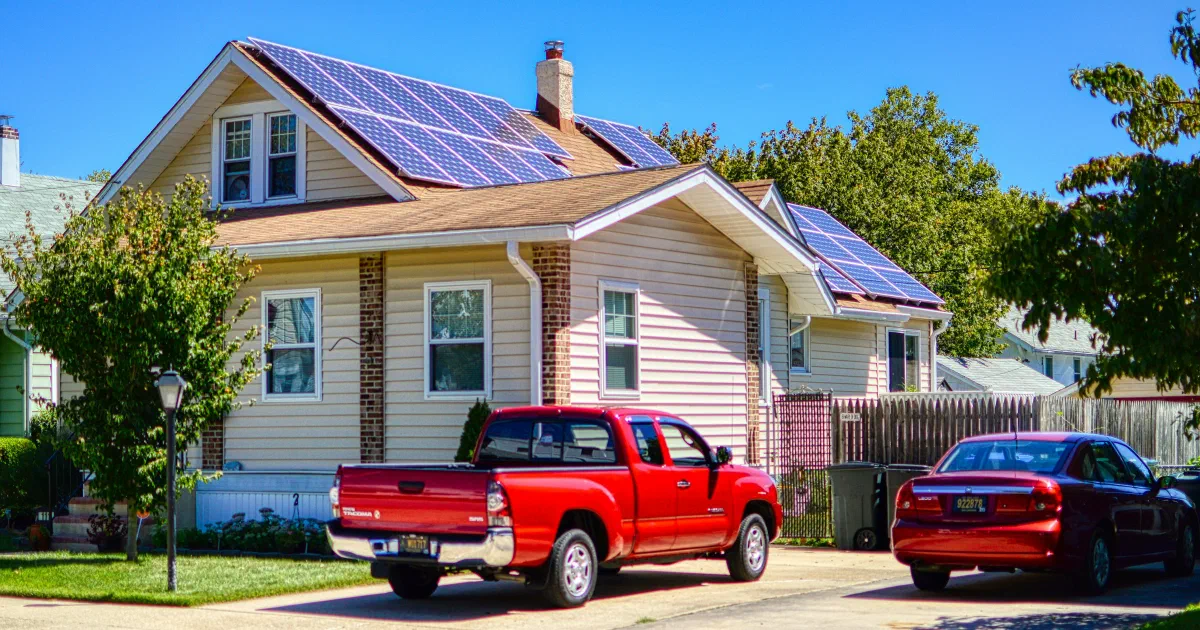
What This Means for Homeowners With Solar
Georgia Power does not offer full retail net metering to new customers.
- Instantaneous netting (open to new customers): energy you use as it is produced offsets your usage. Energy you export is credited at the annual Solar Avoided Cost Rate, which Georgia Power lists as 3.2188 ¢/kWh for 2026, plus a 4 ¢/kWh adder approved in the 2022 rate case. That adds up to 7.2188 ¢/kWh.
- Monthly netting: limited to customers already in the 5,000-customer pilot.
- Size limit: 10 kW AC for residential systems.
- Enrollment limit: instantaneous netting is first come, first served until renewable capacity reaches 0.2% of the company’s prior-year peak demand.
- Metering charge: the RNR-11 tariff lists $5.97 a month for single-phase service.
The practical point: a kWh you use yourself avoids the retail energy charge (8.2 ¢ in winter, up to 15.1 ¢ in summer, plus fuel). A kWh you export earns 7.2188 ¢. Systems sized to match daytime use, or paired with a battery, keep more of their output at the higher value. The lower fuel charge since June slightly reduces what each self-used kWh saves.
What to Check on Your Bill
- Your rate plan. The seasonal prices above apply to the standard Residential Service plan only.
- The fuel line. It is separate from your plan’s energy charge and changed on June 1.
- Your billing dates. A bill that spans late September and early October is split between seasons.
- Your solar credit line, if you export power, and whether you are on monthly or instantaneous netting.
What Happens Next
- Fuel: Georgia Power must file its next fuel case no later than February 28, 2029.
- Data centers and fuel costs: the settlement calls for a review of how the largest customers contribute to fuel costs.
- Storm charge: the PSC applied tax credits to hold the storm charge down. Inside Climate News reported that customers could face higher recovery charges once that offset ends.
- Base rates: frozen through at least the end of 2028.
- 2029: Georgia Power projects that large-load contracts will save the typical residential customer $180 a year beginning in 2029. This is a company projection, not an approved rate.
Limitations
We did not obtain the fuel rate in cents per kWh, the basic service charge or the current Residential Service tariff sheet, so this article does not give a total bill. The RNR-11 tariff we reviewed is dated January 2023; the 2026 export rate comes from Georgia Power’s solar FAQ page. EMC and municipal utility rates are not covered.
Sources
- Georgia PSC, news release on fuel and storm stipulation approval, May 28, 2026
- Georgia Power, “Georgia PSC approves plan to lower overall rates,” May 28, 2026
- Georgia Power, “Georgia Power delivers lower costs for customers with latest filings,” Feb. 17, 2026
- Georgia Power, “Georgia PSC approves plan to freeze Georgia Power base rates through at least 2028,” July 1, 2025
- Georgia Power, rate changes page
- Georgia Power, Residential Service rate plan
- Georgia Power, residential rooftop solar FAQs
- Georgia Power, RNR-11 tariff
- Georgia Recorder, “Commission approves Georgia Power fuel rate decrease,” May 29, 2026
- Inside Climate News, “Georgia Power Rates Dip, But the Savings Aren’t Likely to Last,” June 5, 2026
Frequently asked questions
Did Georgia Power rates go up on October 1, 2026?
No. We found no Georgia Power rate change approved for October 1, 2026. October is when the standard residential plan switches from summer pricing (June to September) to the lower winter energy rate (October to May).
How much did Georgia Power bills drop in 2026?
About $4 a month, or roughly $50 a year, for a residential customer using 1,000 kWh a month, starting June 1, 2026. The Georgia PSC says savings vary significantly by usage and rate plan.
When can Georgia Power base rates change again?
Base rates are frozen through at least the end of 2028 under a plan the Georgia PSC approved on July 1, 2025. Fuel and storm cost charges are outside the freeze. The next fuel case is due no later than February 28, 2029.
What does Georgia Power pay for rooftop solar exports?
For 2026, Georgia Power's Solar Avoided Cost Rate is 3.2188 cents per kWh, plus a 4 cent per kWh adder for customers on instantaneous netting. Monthly netting is limited to customers already in a 5,000-customer pilot.