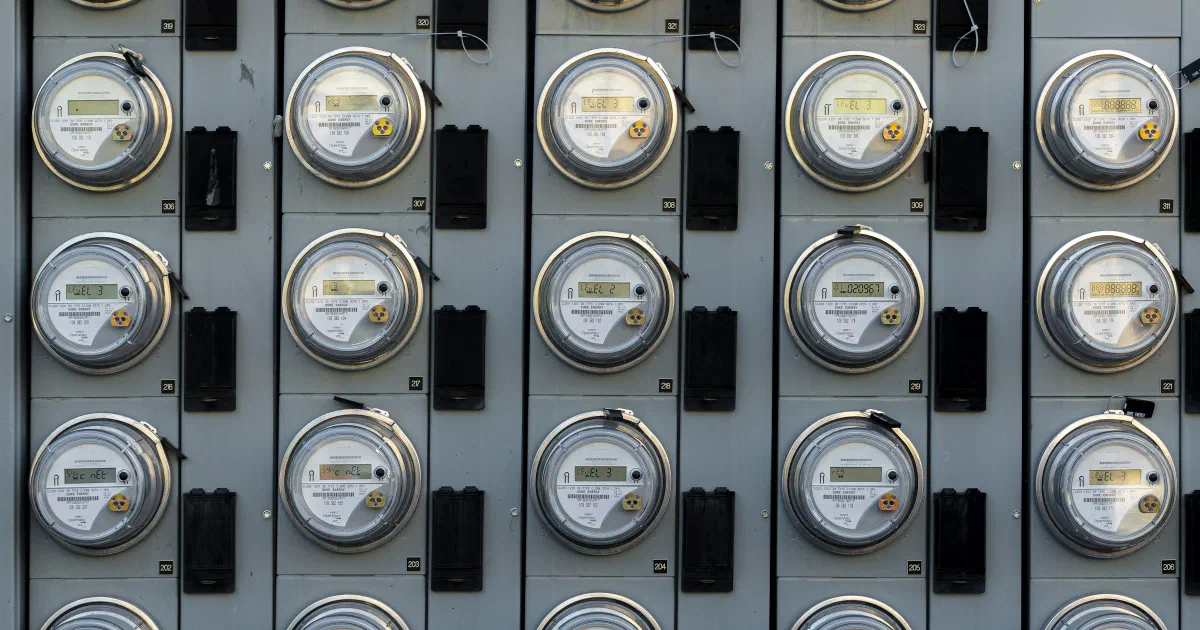
Electric bills swing with the seasons. EIA expects an average electric-heated home to pay about $270 for electricity in January alone, far more than in a mild spring month. Budget billing smooths those swings into one predictable monthly amount. It is useful for budgeting, but it does not make electricity cheaper.
How It Works
- The utility looks at your past usage, usually the last 12 months.
- It sets a monthly amount near the average.
- You pay that amount each month while your actual usage is still metered and tracked.
- At set points it compares what you paid with what you owed and adjusts.
Monthly budget amount ≈ total charges over the last 12 months ÷ 12
Three Real Programs, Three Designs
| Utility | How the amount is set | How it adjusts | True-up |
|---|---|---|---|
| Georgia Power (GA) | Your current bill averaged with the previous 11 months | Recalculated monthly; one-month notice before a change | After 12 months, any balance is “divided equally over the next 12 months” |
| Roseville Electric (CA) | Previous 12 months of use averaged | Periodic reviews; changes after a significant shift in use | “Your budget plan will true-up after 11 months” on a settlement statement |
| Eastern Maine Electric Cooperative (ME) | Previous year’s use, billed over 11 months | Adjusted if average use changes 10% or more | June bill is the “true-up” bill |
Eligibility rules seen in these programs:
- 12 months of service at your address (Georgia Power, Roseville); 9 months (Eastern Maine).
- An account in good standing or a zero balance.
- Georgia Power: you cannot rejoin within 12 months of leaving. If you leave, the difference between your actual charges and your budget payments is due in full.
- Roseville: customers with an “annualized solar account” are not eligible.
Georgia Power’s page currently says enrollment is temporarily paused, and Eastern Maine’s 2026 enrollment window has closed. Check availability with your utility.
The Math, With an Example
These monthly bills are invented to show the method.
| Month | Jan | Feb | Mar | Apr | May | Jun | Jul | Aug | Sep | Oct | Nov | Dec |
|---|---|---|---|---|---|---|---|---|---|---|---|---|
| Actual bill | $95 | $88 | $92 | $110 | $150 | $185 | $205 | $198 | $160 | $105 | $98 | $130 |
- Total for the year: $1,616
- Budget amount: $1,616 ÷ 12 = $134.67 a month
- Range smoothed out: $88 to $205, a $117 swing
What if next year costs more? Suppose rates and usage push the next year’s actual charges up 5%, to $1,696.80, while you keep paying $134.67:
- Shortfall at the true-up: $1,696.80 − $1,616.00 = $80.80
- Under a Georgia Power-style plan, that is spread over the next 12 months: $80.80 ÷ 12 = $6.73 more a month, on top of a recalculated budget.
- Under a settle-up plan like Roseville’s or Eastern Maine’s, it can arrive as one bill.
The reverse also happens: a mild year or lower rates leaves a credit.
The Catch
- Budget billing hides price changes. If rates rise mid-year, your payment may not change until the next review, and the difference builds quietly. This year, EIA forecasts a 4% rise in winter electricity spending for electric-heated homes. See our winter heating forecast.
- The true-up can be a surprise. Find out which month it falls in.
- Leaving can cost you. Some programs make the whole difference due at once.
- It does not change your rate. Fixed charges, per-kWh prices and riders are the same. See fixed charges and solar and how to read your electric bill.
Solar Owners: Two True-Ups Can Collide
Solar homes on annual net metering already have a yearly true-up, when banked credits are settled. Budget billing adds a second averaging layer. That is why Roseville Electric excludes annualized solar accounts. If your utility allows both:
- Ask whether the budget amount is based on your net usage (after solar) or gross charges.
- Ask how banked solar credits are treated in the budget calculation.
- Find out whether the two true-ups fall in the same month.
Is It Right for You?
Budget billing tends to suit you if:
- Your bills swing widely with the seasons, such as with electric heat or heavy air conditioning.
- A predictable payment matters more to you than seeing the month-to-month changes.
- You have been in your home at least a year.
It may not suit you if:
- Your usage is about to change a lot, such as adding an EV, a heat pump or solar.
- You would rather see price changes immediately.
- A lump-sum settlement bill would be hard to pay.
Limitations
These are three examples, not a survey. Program rules change, and we read each utility’s public page, not its tariff. The monthly bills in the example are invented. This is general information, not financial advice.
Sources
- Georgia Power, Budget Billing
- City of Roseville, Roseville Electric Budget Billing
- Eastern Maine Electric Cooperative, Budget Billing
Frequently asked questions
What is budget billing?
A payment option that sets your monthly electric bill to an average based on your past usage, so you pay about the same amount each month instead of high bills in peak seasons and low bills in mild months. It is also called levelized or average billing.
Does budget billing save money?
No. You pay for all the electricity you use. Georgia Power, for example, says the program is free but is not a discount. It changes when you pay, not how much.
What happens at the budget billing true-up?
The utility compares what you paid with what your actual usage cost. Depending on the program, a balance is billed in one settlement statement, applied as a credit, or spread over the next 12 months.
Can solar customers use budget billing?
It depends on the utility. Roseville Electric in California excludes customers with an annualized solar account. Others may allow it. Ask your utility how budget billing interacts with your net metering true-up.